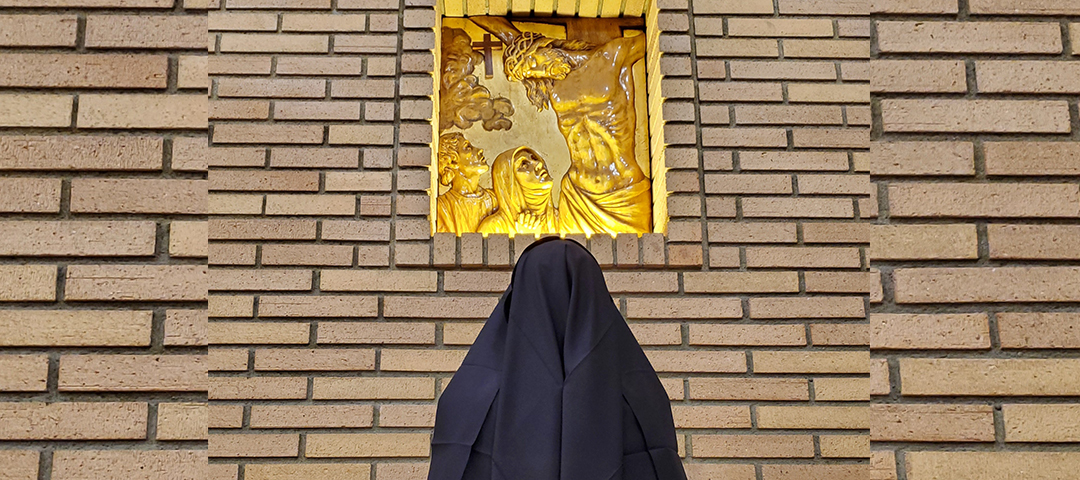
Discernment
“We love because He first loved us.” (1 Jn. 4:19)
You have been loved into existence by God Himself, and love elicits a response from the one who is loved.
Your heart was created to love in a very specific way. Discovering and responding to this invitation to give your heart to another is the process of answering “the call”.
Your vocation, a word stemming from the Latin, vocare, is a gift given to you by the Heart of the Father, tailored specifically to and for you. It is the very means by which your own heart will obtain the greatest fulfillment this side of heaven and also the means to your holiness.
Your vocation is not something to be grasped at or “figured out”, but rather a gift to be received and loving responded to. “Lord, how have you created my heart to love you?”
A Religious Vocation
A religious vocation is a radical response to the call of Christ to follow Him in living the same life that He did: poor, chaste, and obedient through the profession of three vows (poverty, chastity and obedience).
In The Romances, a poem by our holy father, St. John of the Cross, a loving dialogue takes place between the Father and the Son in heaven as the Father invites the Son into the mission of the Incarnation: “My Son, I wish to give you a bride who will love you…”
“It is [the Holy Spirit] who shapes and molds the hearts of those who are called, configuring them to Christ, the chaste, poor and obedient One, and prompting them to make His mission their own.” – Vita Consecrata 19
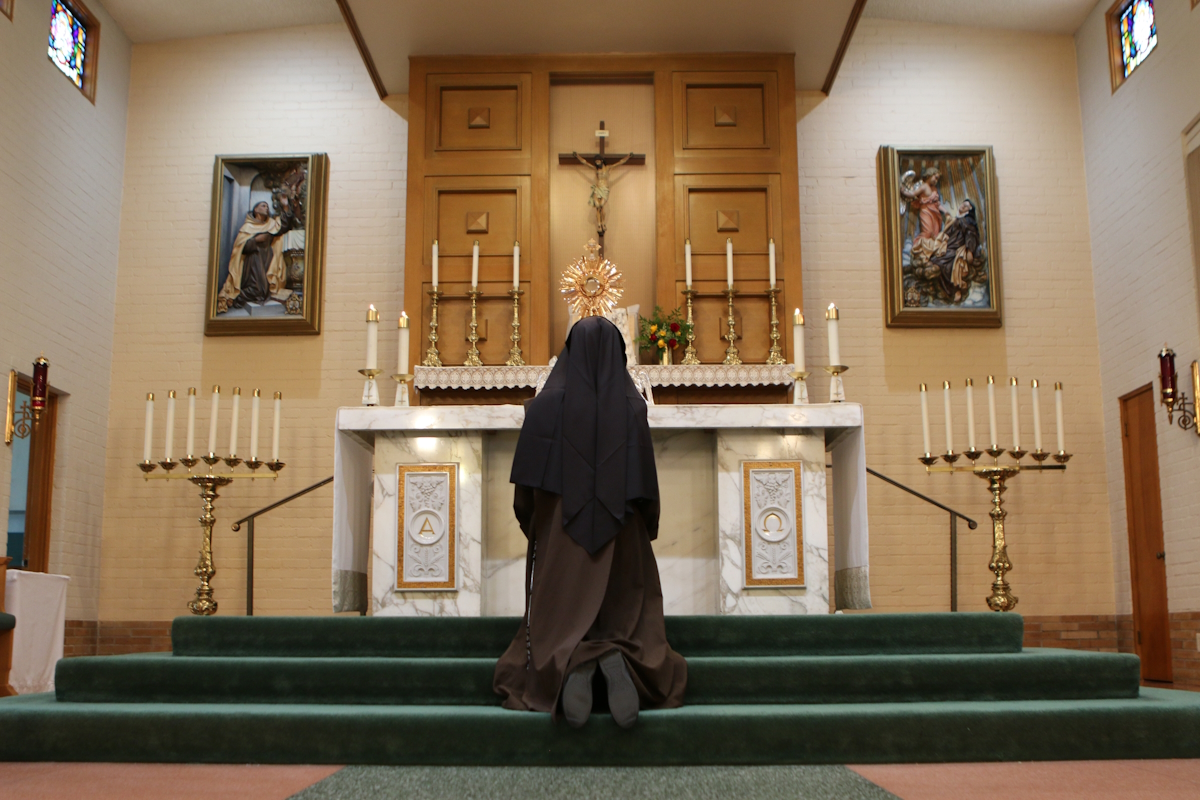
Self-Gift
“God calls a person whom he sets apart for a particular dedication to himself. At the same time, he offers the grace to respond so that consecration is expressed on the human side by a profound and free self-surrender.
The resulting relationship is pure gift. It is a covenant of mutual love and fidelity, of communion and mission, established for God’s glory, the joy of the person consecrated, and the salvation of the world.” – Essential Elements in the Church’s Teachings on Religious Life #5
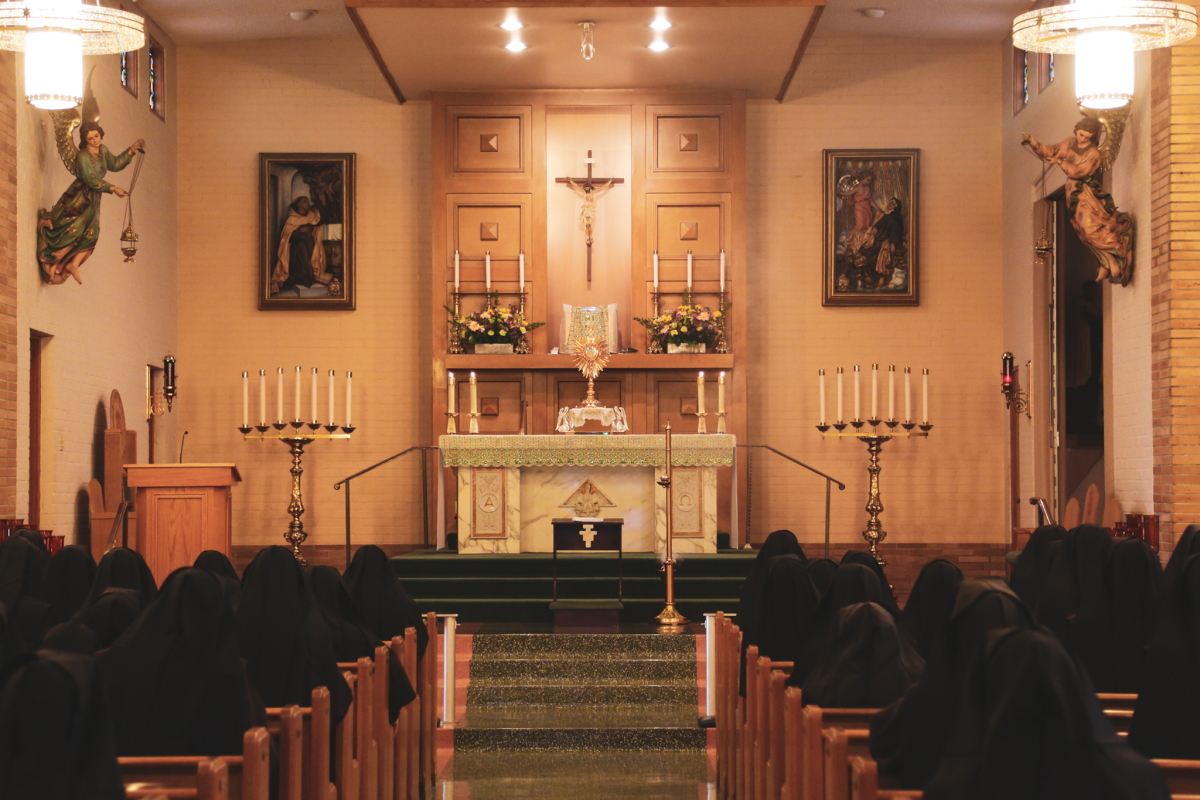
Heart of the Church
In your intimate friendship with Jesus Christ, He can make known his invitation to follow him closer and in radical surrender. “The Consecrated Life, deeply rooted in the example and teaching of Christ the Lord, is a gift of God the Father to his Church through the Holy Spirit.” (VC, #1)
Through the evangelical vows of chastity, poverty and obedience, this gift makes visible the presence of Our Lord Jesus Christ. “In every age there have been men and women who, obedient to the Father’s call and to the prompting of the Spirit, have chosen this special way of following Christ, in order to devote themselves to him with an “undivided” heart (cf. 1 Cor 7:34).” (VC, #1)
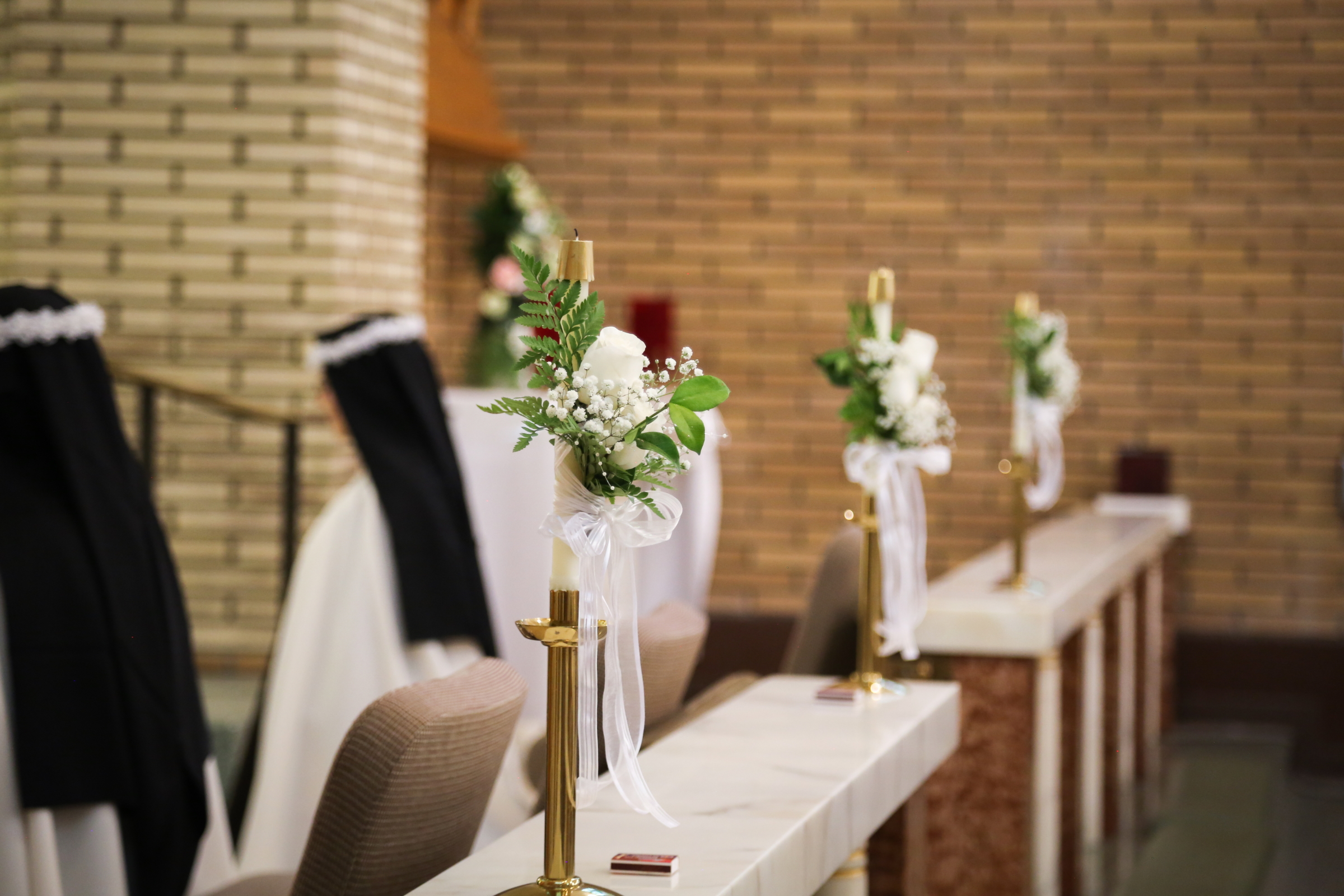
Gift for the Church
You know the one in whom you have put your trust (cf. 2 Tim 1:12): give him everything! Young people will not be deceived: when they come to you, they want to see what they do not see elsewhere…
An impassioned love of Jesus Christ is a powerful attraction for those other young people whom Christ in his goodness is calling to follow him closely and forever.
Our contemporaries want to see in consecrated persons the joy which comes from being with the Lord…who do not let themselves be overwhelmed by everyday things, but let themselves be captivated by the fascination of God and of his Son’s Gospel.
Do not forget that you, in a very special way, can and must say that you not only belong to Christ but that “you have become Christ”! (cf. VC, 109)
How do I discern religious life?
Read More
Spiritual Direction
Read More
Service
Read more
Spiritual Reading
Read More
Sacraments
Read More
Silence
Read More
Community
Read More
Prayer
Discernment FAQ
- How do I know if I’m called to religious life? Do I have to feel 100% certain to take the next step?
- What is the difference between Carmelite spirituality and other religious orders?
- What is your typical day like?
- What is the symbolism behind your habit?
- Do the Sisters wear a habit all the time?
- How long is the formation process before final vows?
- How can I find out more on my own?
There is no simple yes or no, or right or wrong answer. It is the same with almost everything else in life. It is difficult to know without doubt that any aspect of our life is guaranteed with 100% certainty. Knowing this, we move forward in faith and hope and trusting in God’s promises, especially His promise that He will never leave us and that He is always faithful.
We need to place ourselves in a stance of receiving, being attentive to the movements of the heart so as to be open to hearing the Lord’s voice, removing from our lives anything that blocks us from God. His voice can be heard through a Scripture verse that touches us, a friend who encourages us, the words of our spiritual director that guides us, a book that seems to give insight to how we are feeling, etc.
This attentiveness to His promptings, moves us from one moment to the next, in saying yes to the moment right in front of you, then opens the door to whatever is to come. It’s this stepping out in faith, one moment at a time, that moves us in the direction of responding to His call, whatever that may be. In His time and in His way, trusting in His promises, He will guide us.
Each religious order has a specific charism or gift that is given to their founder by the Holy Spirit. Benedictines are known for their attention to the spirit of the liturgy, as well as their hospitality. Dominicans are called the “Order of Preachers” and are known for their preaching. For the Franciscans, the spirit of poverty is the foundation from which their life pours forth. For Carmelites, a life of prayer – the interior life – this is the core, the very heart of who we are. While a life of prayer is the foundation for all religious orders, for Carmelites, prayer is life and life is prayer. Carmelites foster the interior life of the soul.
Our day begins and ends with prayer. The entire day is a movement to walk with the Lord and to be attentive to His promptings as we also serve the people entrusted to our care. Our Vocations page and How We Serve page, combined shares broad strokes in regards to our daily schedule as well as the spirit in which we live our day.
Our habit is a witness of our religious consecration and a testimony to poverty. The brown and white colors of the habit of the Carmelite Order symbolize penance and purity. The rosary that hangs by our side is made by the sister before final profession. The veil teaches us that we belong to God and not to the world. Our “scapular” which goes over the main tunic, originally the monk’s work apron, became a symbol of a way of life and of Marian devotion, a sign of spiritual affiliation with the Carmelites. According to tradition, on July 16, 1251, St. Simon Stock had a vision of Our Lady, who gave him the Brown Scapular and promised final perseverance in grace to those who remained faithful to Carmel until death.
Yes, our sisters wear our habit all the time. Our habit is a part of who we are and serves as a reminder of the greatness of our calling, our vocation. Our congregation was founded during the violent religious persecutions of 1920s Mexico. In those early years, our sisters suffered greatly and were not allowed to publicly live their faith, they were not allowed to wear their habit. Our foundress instilled in her spiritual daughters a great love and reverence for our habit, as it is an outward sign of our commitment to our Lord Jesus Christ and our Lady and of our love for our Holy Mother Church.
To learn more about our formation process, please visit our Formation page.
We have compiled a list of resources for you to explore on your own.
Discernment FAQ
How do I know if I'm called to religious life? Do I have to feel 100% certain to take the next step?
There is no simple yes or no, or right or wrong answer. It is the same with almost everything else in life. It is difficult to know without doubt that any aspect of our life is guaranteed with 100% certainty. Knowing this, we move forward in faith and hope and trusting in God’s promises, especially His promise that He will never leave us and that He is always faithful.
We need to place ourselves in a stance of receiving, being attentive to the movements of the heart so as to be open to hearing the Lord’s voice, removing from our lives anything that blocks us from God. His voice can be heard through a Scripture verse that touches us, a friend who encourages us, the words of our spiritual director that guides us, a book that seems to give insight to how we are feeling, etc.
This attentiveness to His promptings, moves us from one moment to the next, in saying yes to the moment right in front of you, then opens the door to whatever is to come. It’s this stepping out in faith, one moment at a time, that moves us in the direction of responding to His call, whatever that may be. In His time and in His way, trusting in His promises, He will guide us.
What is the difference between Carmelite Spirituality and other religious orders?
What is your typical day like?
Our day begins and ends with prayer. The entire day is a movement to walk with the Lord and to be attentive to His promptings as we also serve the people entrusted to our care. Our Vocations page and How We Serve page, combined shares broad strokes in regards to our daily schedule as well as the spirit in which we live our day.
What is the symbolism behind your habit?
Do the Sisters wear a habit all the time?
How long is the formation process before final vows?
How can I find out more on my own?
A Religious Vocation: A Daily Decision and a Daily Adventure
The Physics of Love
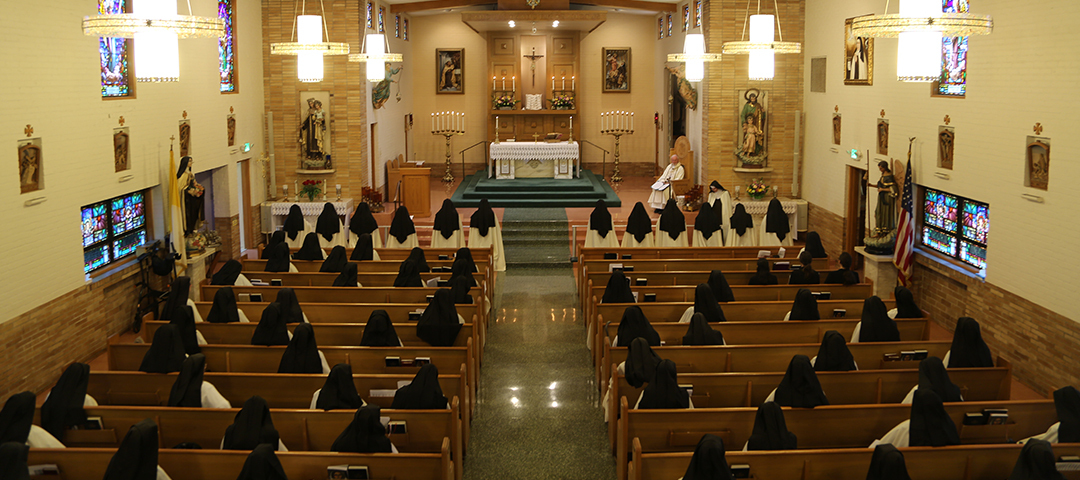
I Will be the One at the End of the Aisle Someday
Dedicated to Wholly Following Christ
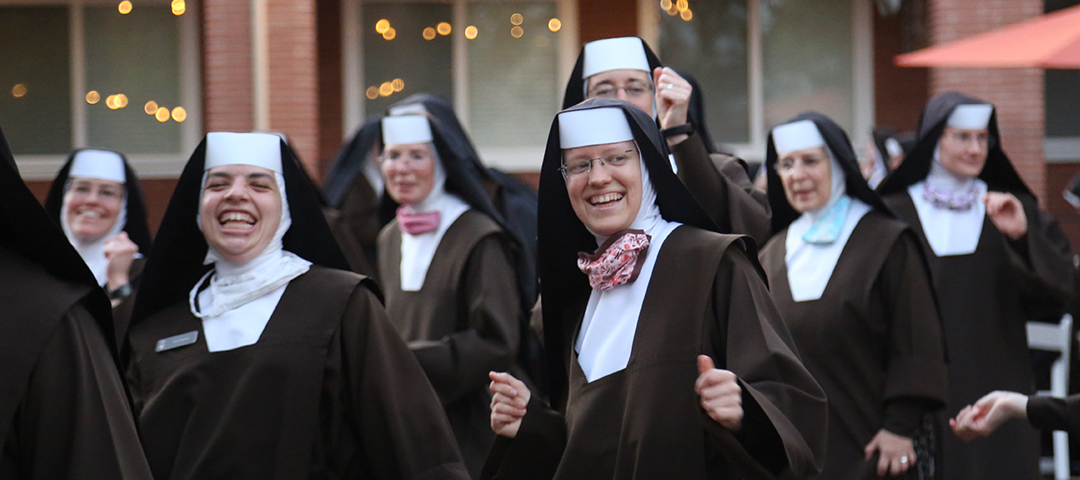
I Sing, I Dance, Rejoice in this Divine Romance…
Let Yourself Be Loved
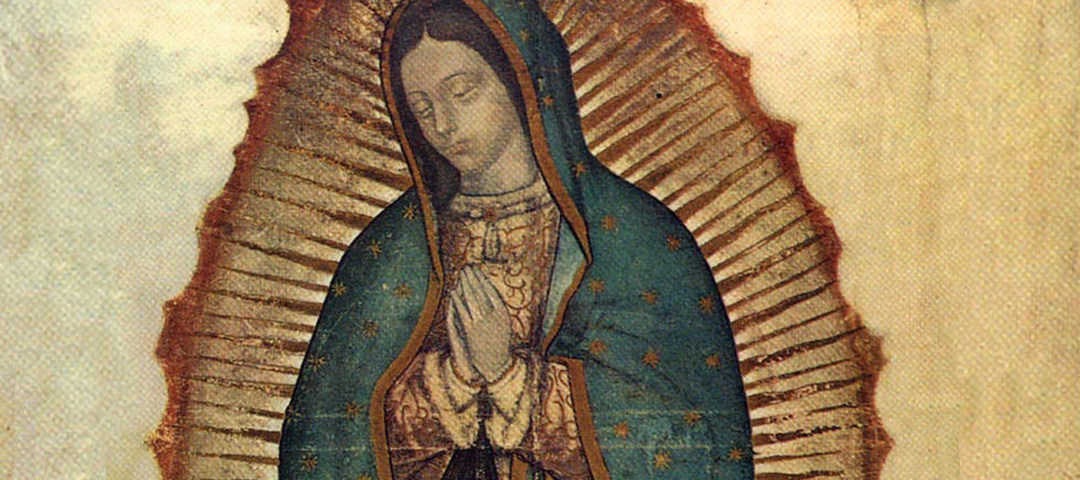
Our Lady of Guadalupe Shows the Way to My True Vocation