By: Sister Mary Scholastica
A handful of times in my life, I KNEW with deep conviction that certain things would come to pass. I can’t explain it. I just knew. My vocation to the Carmelite Sisters was one of these “Aha!” God-moments. I knew in an instant I had a vocation to the religious life and to this religious family. I also knew without a doubt that this inspiration came from God because it certainly wasn’t coming from me.
Another such moment was when I received my religious name, Sister Mary Scholastica of the Cross (all Carmelites have religious titles in addition to their name). Postulants submit three “choices” of possible religious names and titles to the Superior General. The Superior General then takes all the options (including her own inspiration) into prayerful consideration. On the day the postulant enters the novitiate, she hears for the first time her name in religion.
Before I received my name, I KNEW I would be receiving it. For some unknown reason, I knew it was meant for me. I can assure you it was hardly coming from a sense of devotion. Can’t say I knew who St. Scholastica was. Sure, I liked the phonetics of the name but one doesn’t usually ask for a religious name on account of its phonetics. Scho-la-sti-ca. Catchy. Catchy enough for children in our schools to call me “Mister Galactica, Sister Alaska, Sister Elastica, Sister Iglesiastica, Sister Sarcastica” and the list goes on.
Twenty plus years later, I am still trying to “unpack” the meaning of my name and the blessing of being named after a rock of faith, St. Scholastica. Her hidden life, her great love for God and her brother, her steady strength. There is something about her “hidden greatness” that should speak to all of us.
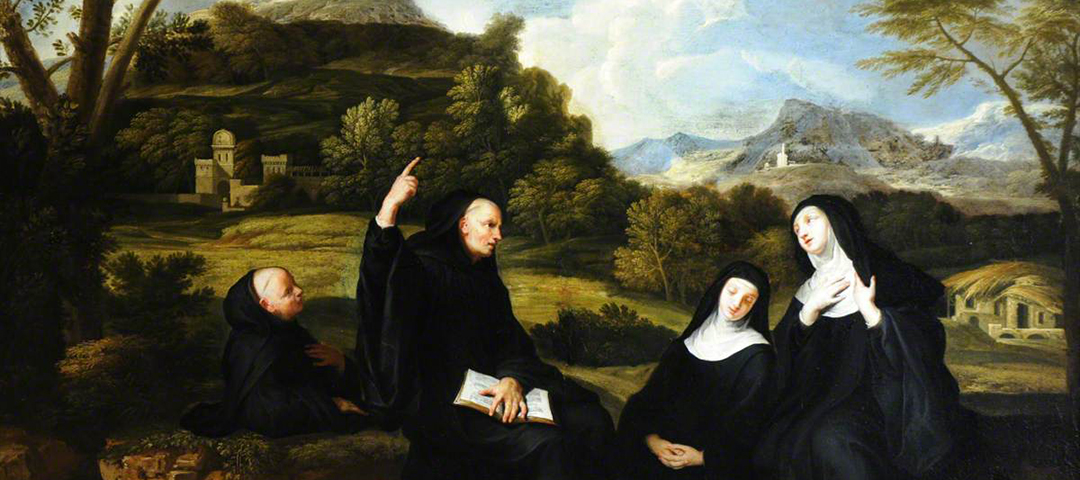
Her brother, St. Benedict, was the public face, and his greatness was evident to all those who encountered him. Benedict is known as the father of Western Monasticism. That’s no small order. He established the Rule that would become the norm for innumerable Christian monks and nuns and is also the patron saint of Europe. Enter Scholastica. Tradition notes that they were twins. I can almost imagine Scholastica pushing Benedict out of the womb making sure to hang on to his ankle so as to be connected to him. This visual would be the epitome of her relationship with her brother. If brother and sister truly were so united in their love for each other and for God, can you imagine what their relationship must have been like?
Benedict’s greatness reflected outwardly the same greatness that resided in the heart of his sister. Greatness comes from living a life completely aligned with God’s will, responding whole-heartedly to the unique call He places within each of our hearts. Greatness does not come from power, prestige, money, position, or recognition. True greatness comes from within. It is hidden. Someone who allows God’s light, His presence to penetrate every fiber of their being and to shine through is in every essence of the word, GREAT. St. Scholastica, pray for us.